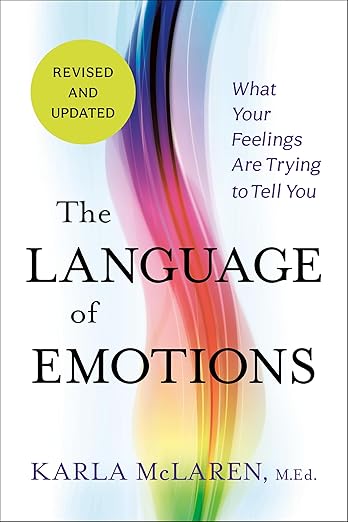
The Language of Emotions: What Your Feelings Are Trying to Tell You: Revised and Updated
Availability varies by external site.
Key Details
- Primary Focus
- Core emotional literacy and processing framework for regulation work
- Appropriate For
- Adults learning to identify, interpret, and work with emotion
- Session Use
- Between-session reading, in-session emotion mapping and regulation planning
Overview
Frames emotions as adaptive signals that provide information about needs and boundaries, emphasizing acceptance and emotional integration.
How clinicians use it
This book takes a non-pathologizing view of emotions, framing all feelings as adaptive signals that communicate needs, boundaries, and internal states rather than experiences to suppress or manage. It emphasizes emotional validation and experiential engagement through recognizing, allowing, and integrating emotions, often with attention to bodily sensations. Clinically, it is a psychoeducational, adjunctive framework relevant to emotional avoidance, repression, and grief or anger dysregulation, aligned with somatic and mindfulness-informed approaches rather than a formal treatment model.